Through materials from a precious panorama hall that existed in Kotohira, Osaka, we uncover the secrets of the circular galleries that became popular throughout Japan during the Meiji period. From the grand panorama depicting the Battle of Sedan to European landscapes, we examine how the immersive 360-degree experience was realized. This discussion elucidates the visual technologies and architectural designs that overwhelmed viewers of the time, as well as the flow of international panorama culture, through detailed examination of actual materials.
Introduction to Materials and Initial Examination
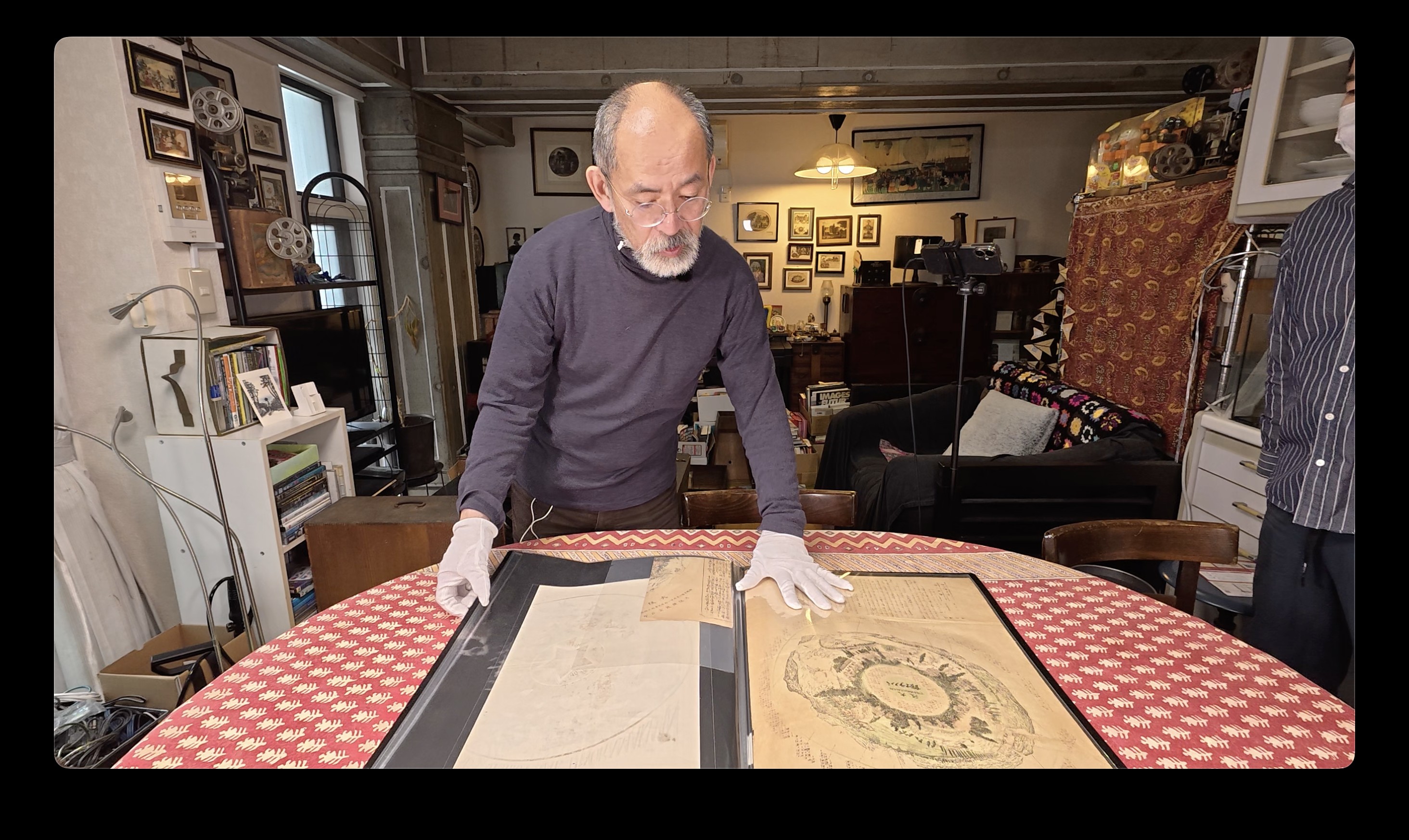
Well then, let us begin. I've brought folders of panorama materials labeled Osaka, Sedan, and Kotohira. We can see "Nanba Shin-chi, Osaka" written on them, which tells us these are Osaka materials. They're marked "Osaka Panorama Hall."
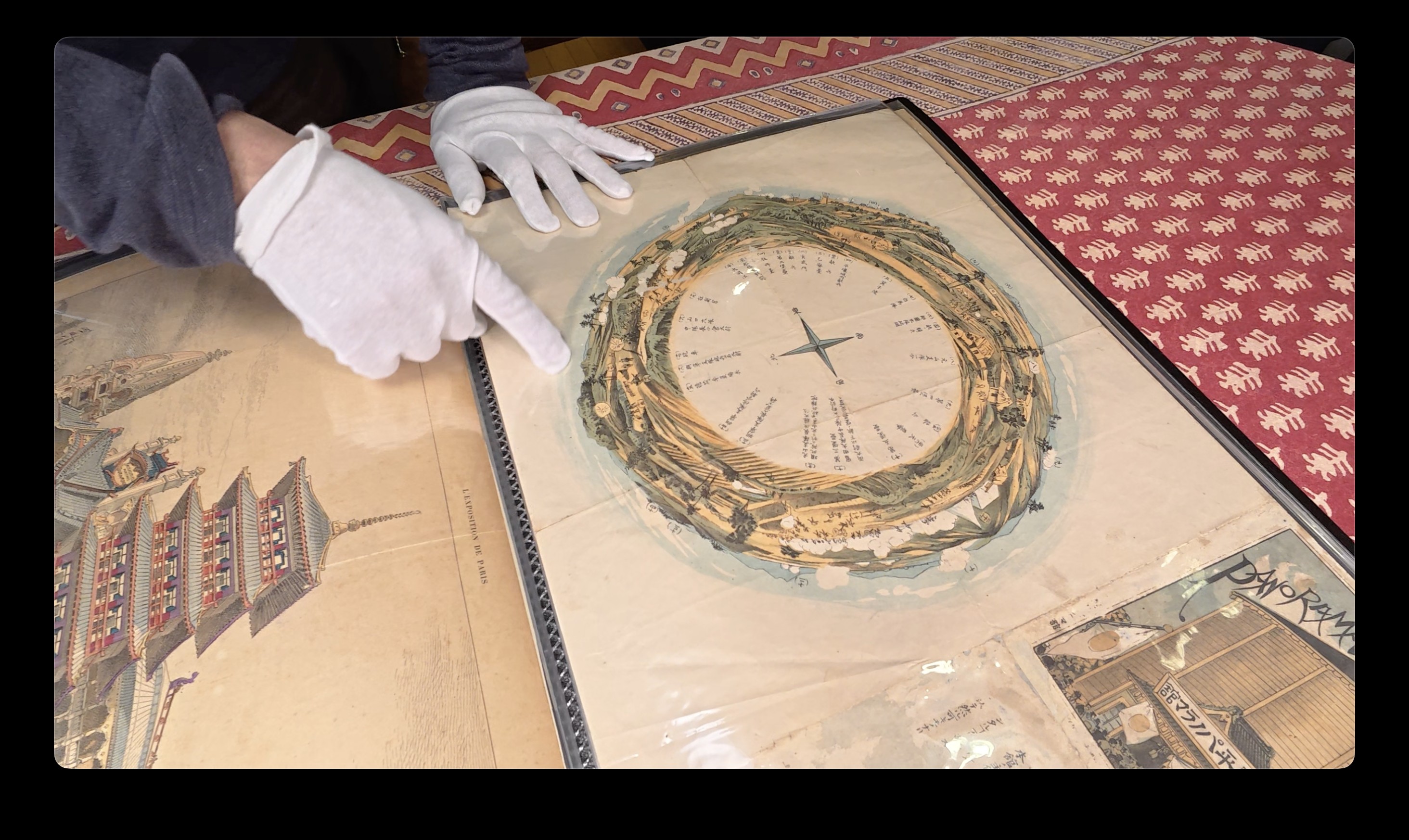
Let me first take a quick look at these. This is a typical type of panorama hall illustration. It depicts the exterior of the panorama and gives a general introduction to the scenery visible from inside the panorama.
This is the same type as well. This is interesting——it's a panorama of Kotohira Mountain. A landscape of Kotohira depicted in panorama style. And this one from the Kotohira Panorama Hall, I suspect it might be a panorama of Pyongyang or a battle from the Sino-Japanese War or Russo-Japanese War.
This is from the Paris Exposition, isn't it?
You're right, it says "L'Exposition de Paris," so it's from the 1900 Paris Exposition. And it appears there was also a panorama hall in front of Yamada Shrine in Ise. You have some rare items indeed. This one is from Kyoto's panorama hall depicting the Sino-Japanese War. There are also various other materials like promotional flyers. Having such a comprehensive collection of panorama materials from regional locations is quite valuable, I must say.
Detailed Analysis of the Sedan Panorama Explanation Diagram
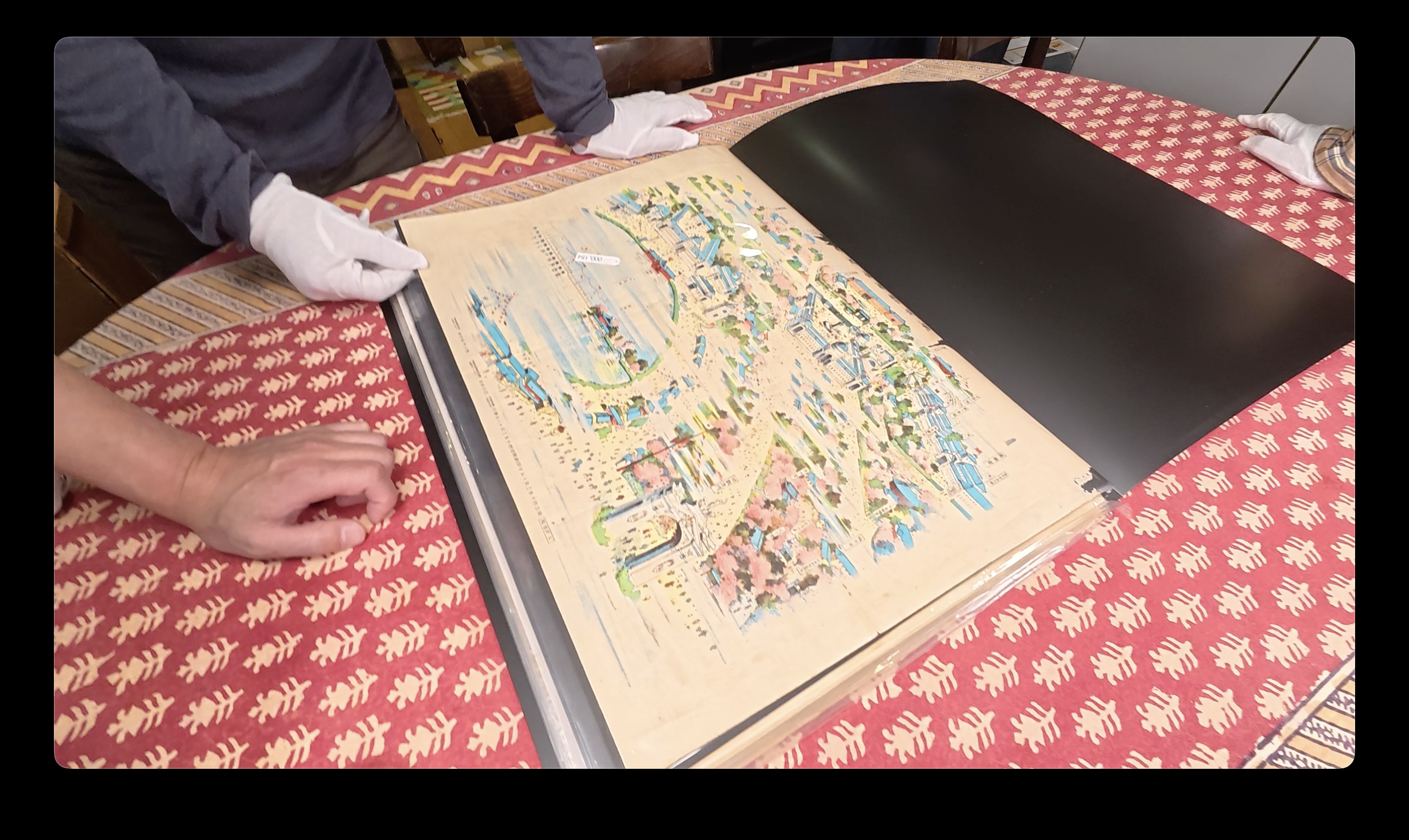
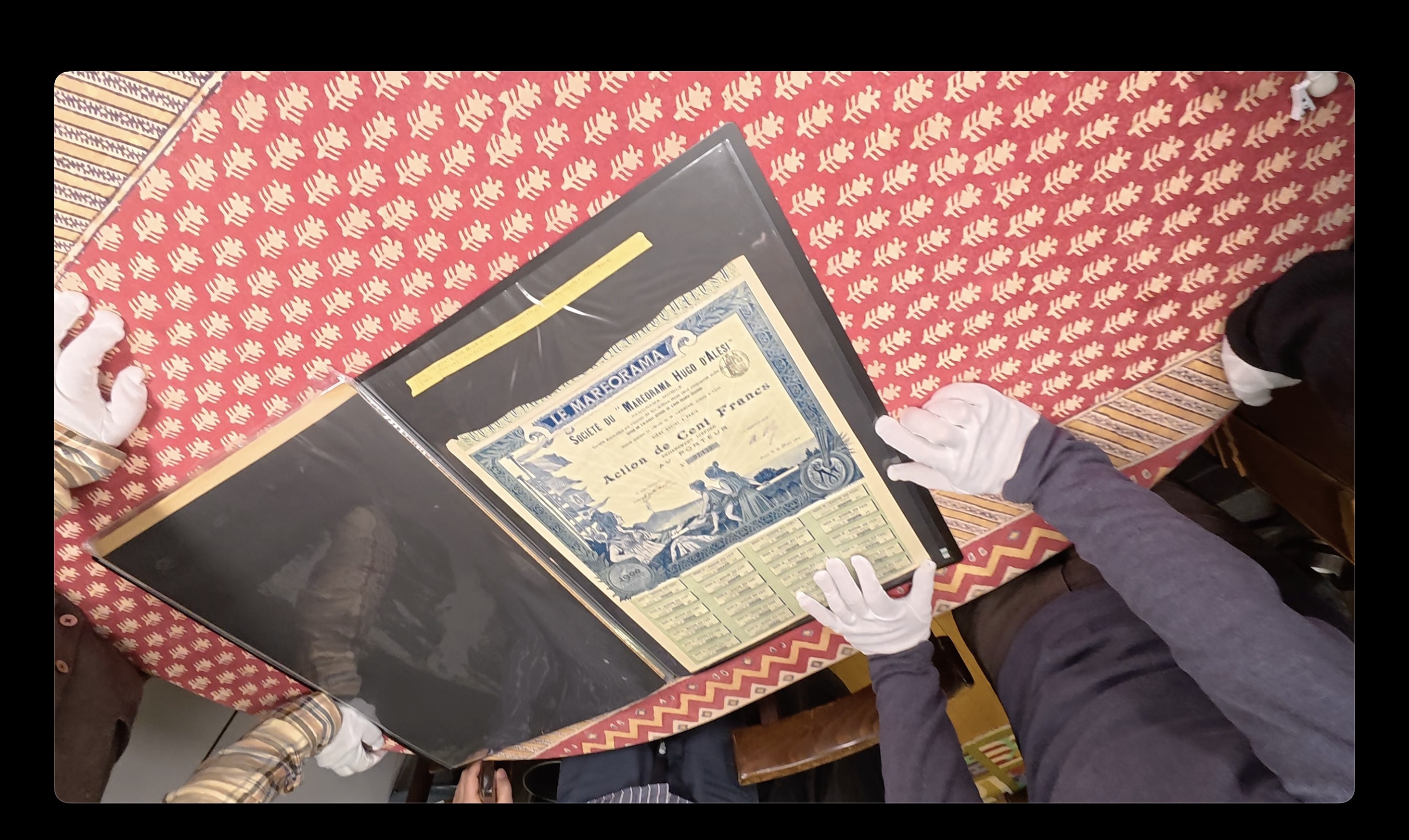
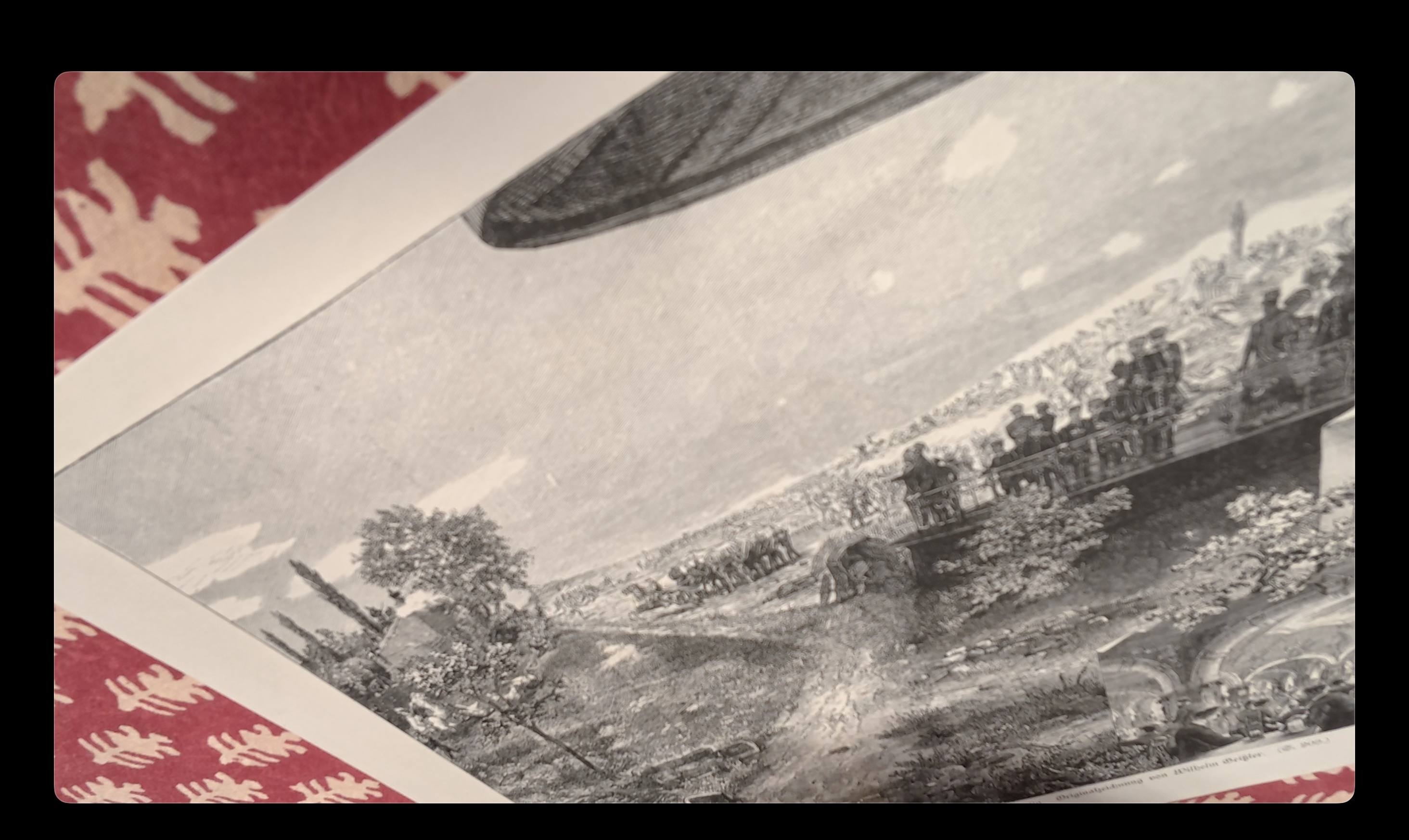
This is the explanation diagram of the Sedan panorama discussed by Maeda Ai——in other words, a woodblock print meant as a souvenir. The exterior diagram of the Sedan Panorama Hall is inserted. A panorama hall basically works like this: once you enter, there is a corridor in the center, and when you climb the spiral staircase in the center, you emerge onto a circular platform.
Here is that platform. Visitors stand here in a line, viewing the surrounding scenery. This is the scenery depicted around it, though it may be somewhat exaggerated.
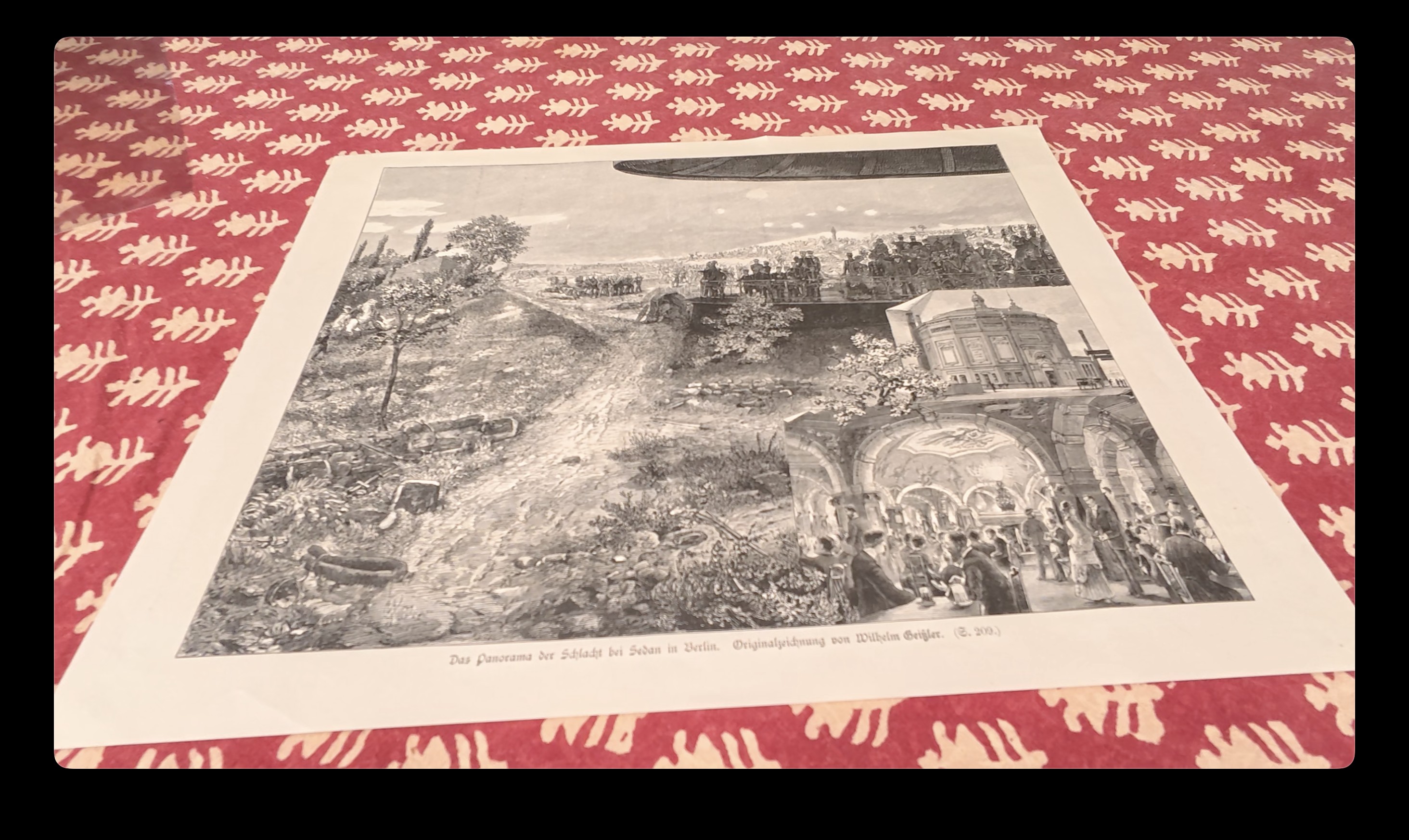
In reality, the painting covered the entire wall. In the case of Sedan, three-dimensional figures and models were placed between the wall and the platform to create a three-dimensional effect, and as you moved further away, you were drawn into the painting——I believe this is how it was structured.
The paintings and three-dimensional figures or models depicted here are shown seamlessly, with no visible seams, but in reality all of this distant scenery is just painting. However, when standing on the platform, it appears to have depth and spreads out before you in a way that is overwhelming.
The Immersive Experience of Panorama and Architectural Design Techniques
You understand this when you actually visit one, but if you only hear the explanation, you might think "there are figures between the painting and us, and it's just a painting." However, when you're surrounded by 360 degrees, you truly feel drawn into the landscape.
Panoramas bring in natural light from above, but if sunlight enters directly, it reveals that the light is coming from outside, so placing a large roof over the platform is standard practice. This roof is also depicted in the diagram. This is why the materials on the Sedan panorama are quite credible in helping us understand what it was actually like.
Was there a kind of salon where visitors who had finished viewing could gather and talk?
Looking at this diagram, there may have been such a salon on the first floor. It wouldn't be surprising if there was.
Creating Presence and Comparison with Modern Technology
What's interesting is that immersive experience——something that in modern times you'd experience by putting on a head-mounted display and entering a VR world——could be experienced without any display device.
Back then, "presence" was an extremely important keyword. In order to create the sense of being there, the wall paintings didn't just depict scenery; the size of the scenery was precisely calculated so that the sense of distance and perspective was correct from the platform. The placement of figures between the scenery and the platform was also carefully calculated——where to place what would create the most seamless effect. Especially the seams between the paintings and the figures or landscape——matching the texture of sand, planting trees for concealment——this level of detail was extremely carefully crafted.
Are there facilities today creating similar panorama experiences using modern technology but without VR, using physical layout?
I don't think so. About a decade ago, at a Swiss exposition, they installed a historic panorama on the second floor and a modern technology-created panorama on the first floor, but the old panorama was overwhelmingly superior. The modern version on the first floor simply projected 360-degree camera footage in a circular arrangement, without calculating whether the person in the center would see it at the correct realistic size. So there's no real immersion at all. In contrast, the old paintings were carefully drawn so that the scenery appeared at the correct size when viewed from the center of the platform. They were created in accordance with the design of the actual location.
Of course, if you put that much thought into it, modern technology could reproduce it sufficiently. However, people creating panorama experiences today don't know what design considerations are necessary, so it doesn't work well. Precisely because there's no head-mounted display——what's in front of you feels like real proximity. Without the device, your head becomes attuned to the illusion.
The Structure of Panorama Halls and the Design of the Viewing Experience
In this diagram, it doesn't look like you've climbed the spiral staircase in the center.
This is showing the edge of the platform. The spiral staircase comes up somewhere around here. Everyone climbs up from here and stands at this edge to view. When you emerge at the top, it's like a diorama——you enter the building, climb the spiral staircase in the center, and emerge into what seems like an outdoor space——but it's actually a carefully constructed stage.
What's well done is that the corridor and spiral staircase were apparently quite dark. Hagiwara Sakutaro wrote about his experience seeing a panorama in Tokyo, and he notes that it was so dark he couldn't see where the person in front of him was, wondering why they had to walk through such a dark corridor, but when you suddenly reach the top of the stairs and emerge, it becomes bright. That's what gets you.
It's like stepping into another world. Old spectacles were really good at that sort of thing.
Do surviving panorama halls today still have those dark passages?
Not so dark anymore. Europe has several restored 19th-century panoramas, but they're lit brightly for safety. However, there are some good ones. Panorama Mesdag in Scheveningen, the Netherlands, depicts nothing but the scenery of a quaint fishing village, and it's very nice. A peaceful and beautiful place.
The Popularity of Panorama Halls and Their Impact on Common People
Could common people attend back then?
Of course they could. As cutting-edge spectacles, they existed in Ueno and Asakusa, as well as in Osaka and Kotohira. The quality varied, but the ones painted by skilled artists apparently looked so realistic that viewers thought they were seeing something real.
Osaka's Sedan Panorama and National Prestige
By the way, what scenery is depicted in this?
It's written in German at the bottom, isn't it?
I believe it depicts the place of Sedan. During this period, the content largely focused on demonstrating national prestige, with war panoramas being the mainstream. This probably depicts a battlefield as well.
So even in Europe, there was an aspect of enlightening the public and demonstrating national prestige?
During this period, it was war after war. For example, Belgium has a panorama of the Battle of Waterloo. Enemy forces approaching the Napoleonic army spread out 360 degrees, creating an overwhelming sense of inevitable defeat. Poland has a panorama depicting a peasant uprising, and Switzerland's Lucerne has a panorama showing the Red Cross rescuing the wounded.
When there are three-dimensional figures of soldiers pointing guns at the audience, it's genuinely frightening. That's the power panoramas had.
Panorama and Propaganda: Impact on Citizens and Understanding of War
Though the operators were private, there was also a government propaganda aspect to this demonstration of national prestige, wasn't there?
That's right. Initially they were hugely successful and presumably quite profitable. People on the home front had a desire to see what war was actually like. When you went to see a panorama of the Sino-Japanese War, you could truly understand, "Is this where my husband is fighting?" It's called demonstrating national prestige, but more fundamentally, it served the purpose of showing the public what a battlefield was like.
Osaka Panorama Hall: The Depiction of the Sedan War
How to make people feel about war is a double-edged sword, isn't it? If everyone became terrified and thought "I don't want to go there," it would have the opposite effect.
It also had the effect of disciplining the nation——stop unnecessary spending, make supplies available——that sort of thing, I suppose.
Osaka's panorama also had "The Great War of Sedan" as its subject. The Sedan war was a popular theme. Since this shows how that war was depicted, I think we should look at it as a continuation of our discussion. It's also interesting that the same subject panorama was imported from Europe.
Reading the Sedan War Explanation Diagram
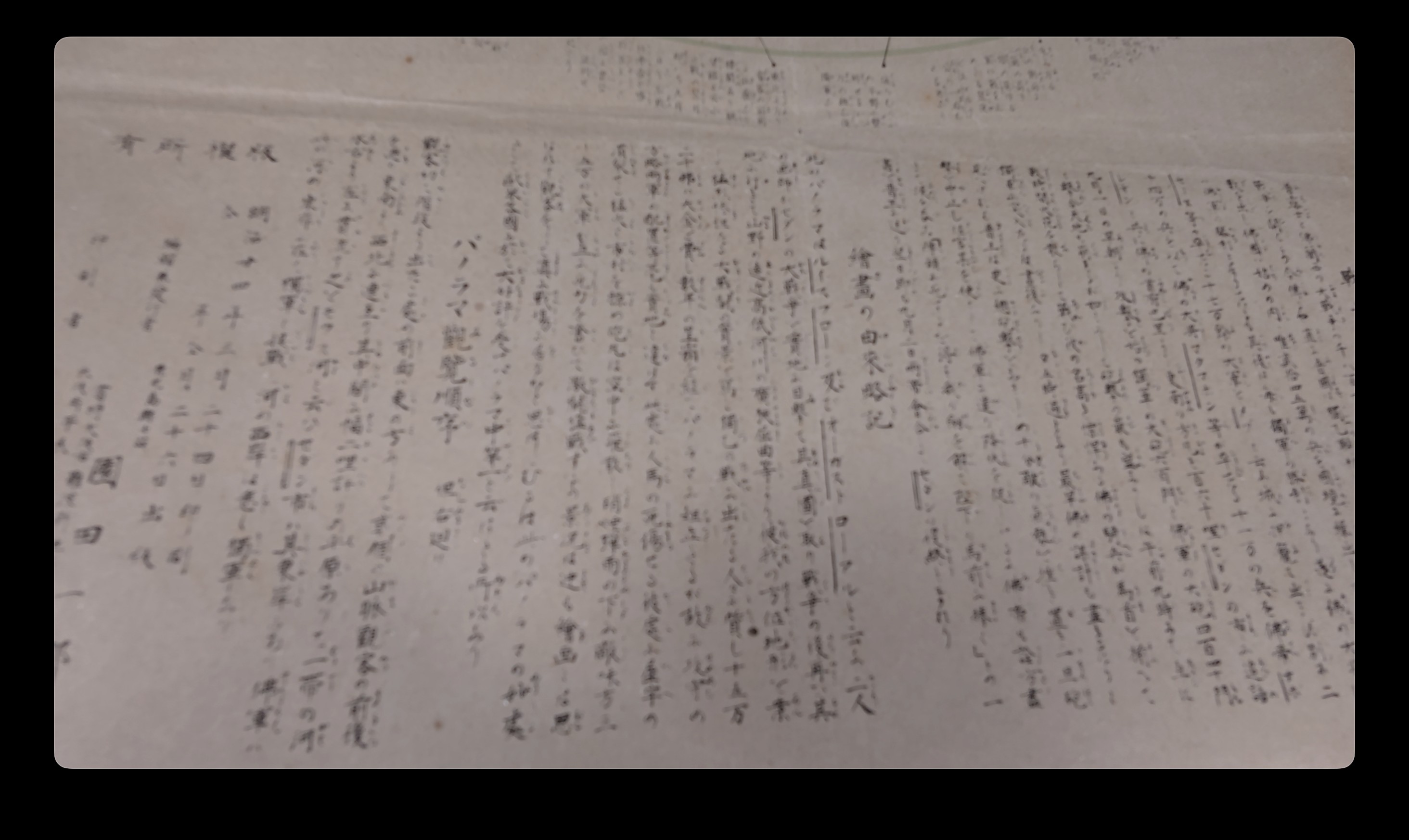
Here is the illustration from the panorama hall that existed in Shin-chi, Nanba, Osaka. There aren't many materials that explain what this panorama hall showed and how, but I believe this is a very valuable resource for understanding it.
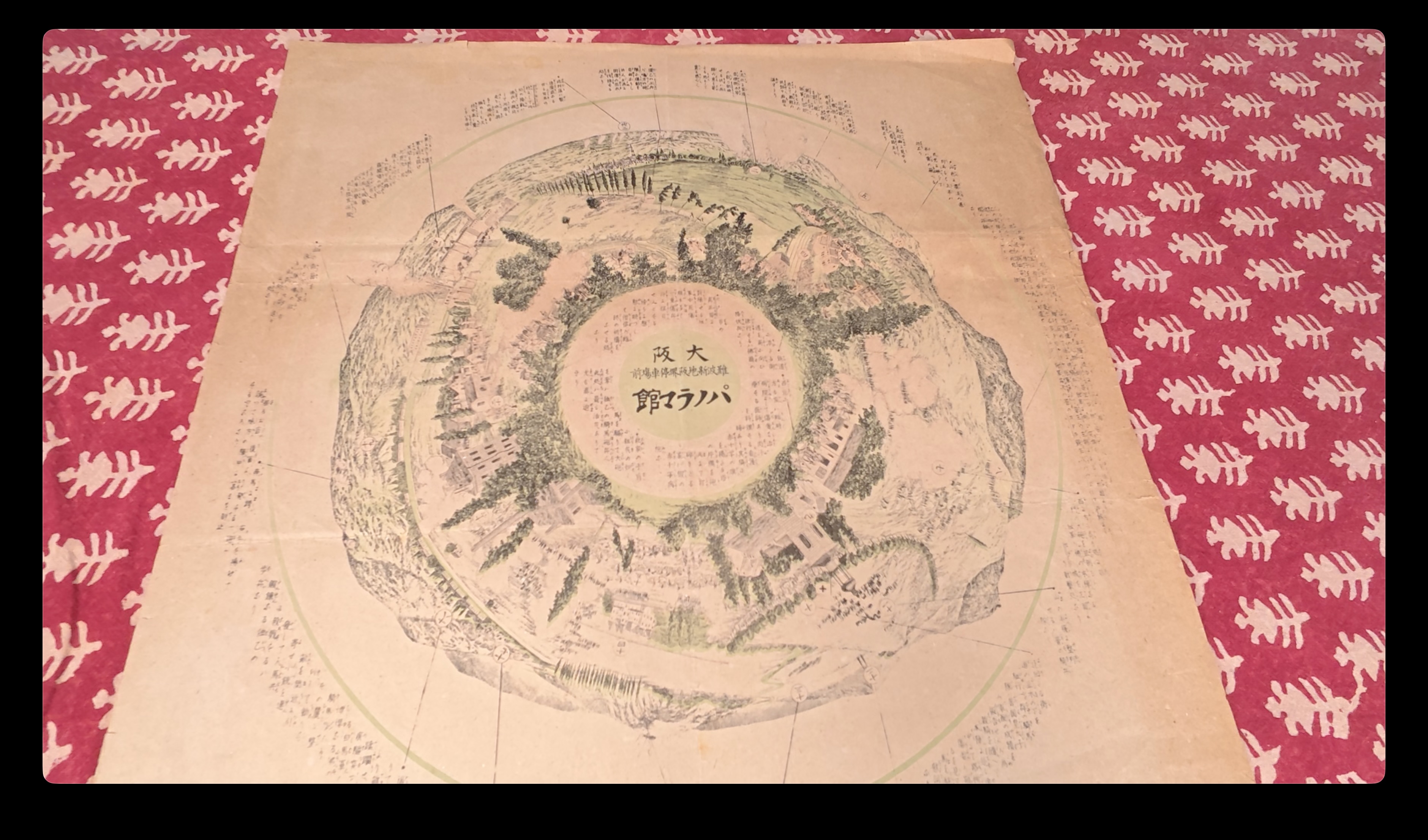
It's dated to 1891, so we can see that shortly after the Ueno and Asakusa panorama halls were built, a similar one was constructed in Osaka. The subject was the Sedan panorama——depicting the Battle of Sedan from the Franco-Prussian War. The first panorama shown in Ueno was imported from America, so this may be an import as well.
It says "painted by an American master artist," doesn't it?
Exactly, as the article states. Various things are written here, but like "the French troops retreating on the road beside the railway are advancing southward," lines are drawn to each element, making it easy to see at a glance what's depicted where. Looking at this diagram, the outer part is the painting. The wall was painted like this. Here is the platform, where people stood. Right next to where people stand, trees are planted. This was because if the base of the platform was visible, it would spoil the effect, so they let trees grow thickly around it, and beyond that they staged scenery with roads visible and smoke rising.
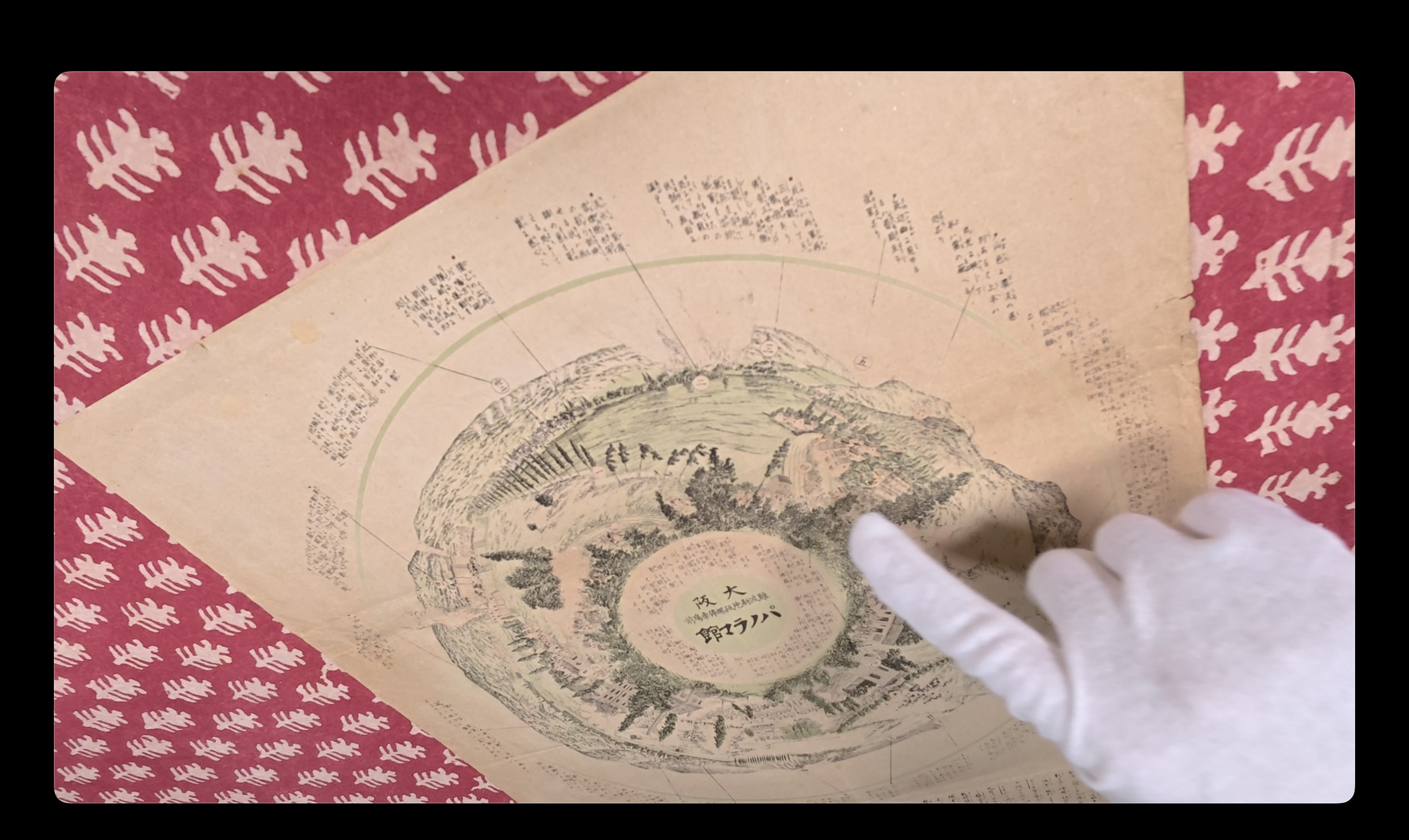
At what point does it transition to the wall painting?
That's hard to tell. Perhaps all of this was painting, and they planted trees in front of it. In the Russo-Japanese War panorama, three-dimensional figures were positioned to enhance the virtual reality feeling, so it's possible they did the same here.
Different Times, Same Image Expression and Narration by Commentators
What's interesting is that rather than being a snapshot of a single moment, it uses the "different times, same image" expression, with various incidents depicted in the same diagram.
Exactly. When you think about it, you don't see all 360 degrees at once; when you look in a certain direction, one scene comes into view. There were probably narrators——there are records of such people in Ueno and Asakusa. Like a tour guide, they would point with a baton and narrate: "What you see there is the such-and-such at Sedan," "Now, please look toward the northeast, where you can see the French army retreating down the road."
Was the Asakusa panorama about the American Civil War?
The American Civil War was in the 1860s. In any case, back then, whenever a war occurred, "war painters" would create these panorama paintings depicting that war.
Panorama Souvenirs and Media Strategy
This was a souvenir, wasn't it?
I believe so. It says "Price: Two Sen" on it.
Since the panorama experience itself couldn't be taken home, people would buy these and take them home to talk about and preserve the memory.
So people who saw these would want to go visit. It also served an advertising function.
Clockwise Viewing Order: Structure as Timeline
Instructions for how to view the panorama are also provided, stating "but proceed clockwise" for the viewing order. Visitors first look east from the front when exiting the stairs, viewing mountain ranges, and then progressively view the landscape extending from southeast to northwest.
Indeed, the numbers increment clockwise.
Is this more than just traffic control——was it a painting designed with awareness of this sequence?
Probably so. As you view in this order, you gradually see the direct confrontation between French and German forces, creating great excitement through the composition.
So it's structured like a timeline.
I never would have thought there would be a timeline in a panorama hall. That's fascinating.
This is what was happening in Osaka.
Import of Wall Paintings and International Production
You mentioned earlier that things were "imported," but do you mean the wall paintings were physically brought over?
Since the paintings were on canvas, they could be rolled up and transported.
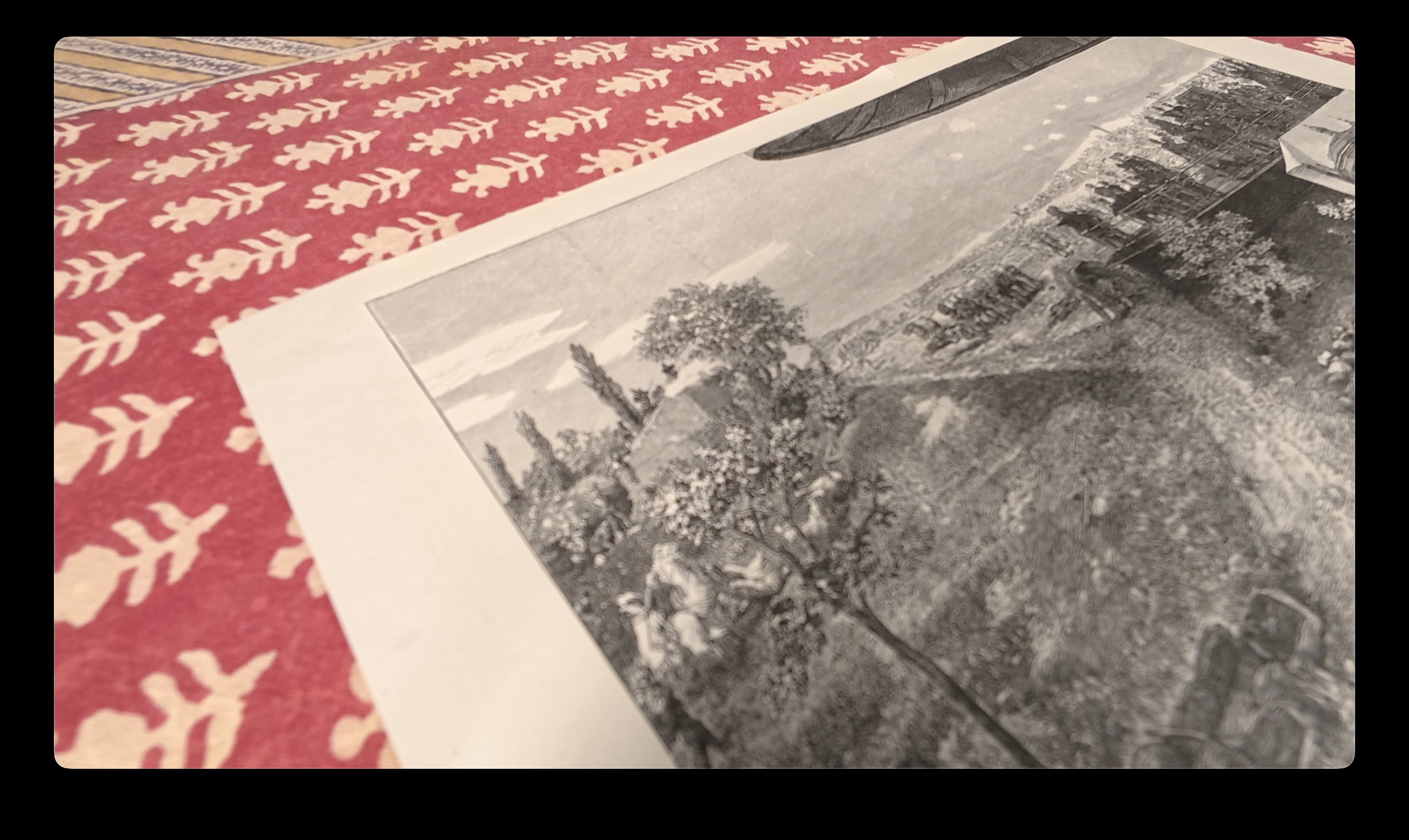
It was difficult, though. Historic panoramas still exist in the Yushukan museum at Yasukuni Shrine, including ones painted by the Goseda family. They're like enormous scrolls. Back then, oil paintings were just affixed to canvas, so they would peel off under their own weight, and there are records that restoration was very difficult.
Panorama's Journalistic Role and Democratization
It also had a role as journalism, didn't it? Conveying "this is what happened."
And more than just showing explanatory pictures, the amazing thing about panoramas was that they made you feel "this is how it would feel to be there," giving you a sense of actually experiencing it.
Were there popular themes besides war?
As I mentioned earlier, the panorama in Scheveningen, the Netherlands, simply depicts a fishing village landscape and is an extremely peaceful space. "I want to stay here," is the feeling it evokes. War panoramas gradually become oppressive, making you feel like you're being attacked, but this one is different. There's also a panorama in Thun, Switzerland that depicts only townscapes. Since the town hasn't been damaged by war, similar streetscapes still exist today, making it a very peaceful panorama.
Still, war panoramas were the ones produced in greater numbers, weren't they?
From the late 19th to early 20th century, anti-Japanese panoramas began to be actively produced in China as well. Panoramas continued to be used as propaganda tools. They're efficient because you can mobilize large numbers of visitors at once. But I think what fascinated Professor Kusahara about these materials was that when you're in a panorama, you lose track of where you are——the power of that illusion is extremely strong. The fact that this was achieved without lenses or CGI, using only paintings, figures, and architectural composition, is truly remarkable.
Academic Value of Materials and Future Prospects
That said, while quite a few people have illustrations from Ueno and Asakusa, to meticulously collect regional materials like these is truly impressive. Personally, I could create an entire exhibition just from this panorama file. If we compare the Sedan panorama diagram issued in Germany with the same panorama diagram imported to Osaka, the interest would increase further. The earlier diagram was drawn from the perspective of someone standing on the platform, but this one is like a design blueprint drawn from above.
Japanese panorama halls weren't that large, were they?
When importing, you have to maintain the same scale as the original design, or the size of the scenery will be wrong, so they probably had a certain scale. They needed considerable land.
Just comparing those diagrams is fascinating, though. The perspective of the circular presentation——how would Japanese audiences have received that?
How they drew these bird's-eye view diagrams is fascinating. They may have used a cylindrical mirror in the center for drawing. There were many skilled people in drawing these diagrams back then, but when you think about it, this isn't just simple perspective——it's a method with multiple vanishing points, so considerable skill was required. Since each isn't unnaturally distorted, they must have been skillfully redrawn for explanation purposes.
I'm curious whether the person who drew this explanation diagram was Japanese, or if they copied an original diagram.
The explanations in Chinese characters confirm that it was rewritten in Japan, but there may have been an original diagram. Here it says "two painters, ルイス・フローン (Louis Flown?) and オーガスト・ローアル (August Lower?), painted the Great War of Sedan." So there was definitely an original. Copying something this complex would be difficult, so I suspect the original painting was brought over intact.
The Fundamental Value of the Panorama Experience
Finally, a closing comment, if you please?
Panoramas are really wonderful. The experience of being enveloped by your entire body is excellent.
Today, we've had a fascinating discussion comparing the motif of the Battle of Sedan through panorama diagrams from Osaka and Berlin, and you've taught us deeply about what panoramas really were. If there were a next session, what materials would you like to discuss?
Just for Ueno and Asakusa, there's one black file, so I believe there are many versions. I think it would be interesting to compare them.
We definitely hope to hear from you again next time. Professor Hosoma, thank you very much.