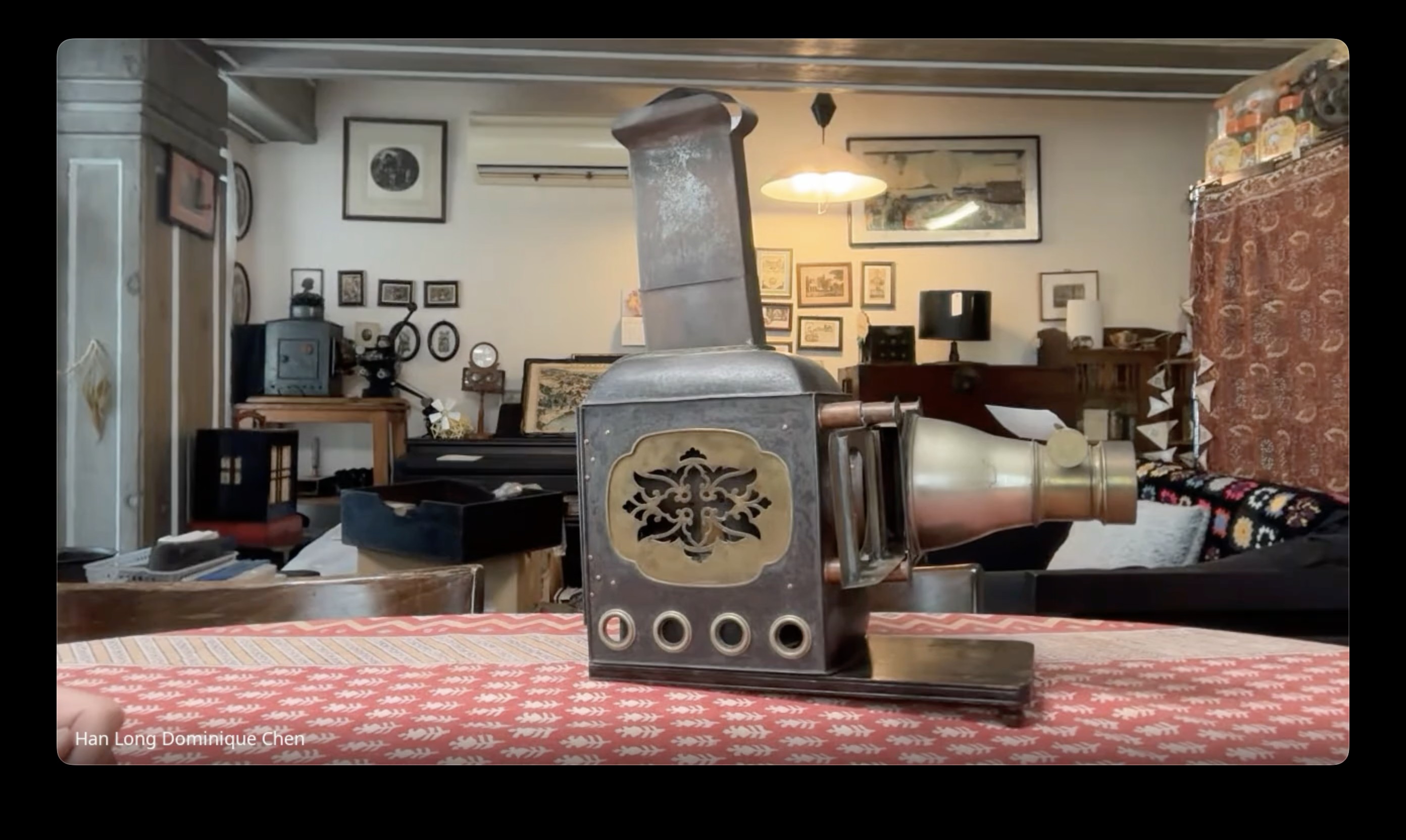
A Japanese magic lantern from the late Meiji era, illuminated by a kerosene lamp — a precious relic where Western technology and Japanese aesthetics converge. Kusahara Machiko discovered this singular specimen at an antique shop in Kyoto in the late 1990s, and it has occupied a special place in her collection ever since. Erkki Huhtamo, who was present at the moment of purchase, was captivated by its unparalleled form and functional beauty. A leading authority in media archaeology discusses this magic lantern, which symbolizes an era when projection technology imported from the West merged with Japanese craftsmanship to evolve in uniquely original ways.
Dominique Chen (00:03)
Today is our first recording session here in Kusahara Machiko's study. We've asked each expert to select one item and share episodes and historical background related to it. Professor Huhtamo, you've chosen a Japanese magic lantern. Please, go ahead.
Erkki Huhtamo (00:50)
Thank you for giving me this opportunity to talk about this artifact. This magic lantern occupies a very special place in the Kusahara Collection, because it was probably the first Japanese magic lantern that Kusahara-san purchased. I was actually present when it was acquired. This happened in the late 1990s, at Wright Shoten, a traditional antique shop in Kyoto that still exists in the same location today. The shop was overflowing with objects, and this lantern was sitting on a shelf. There was another, more incomplete Japanese magic lantern nearby, but Kusahara-san was drawn to this one — and understandably so, for it is a truly fascinating lantern. To the best of my knowledge, this is the only surviving example of a magic lantern of this particular style and form.
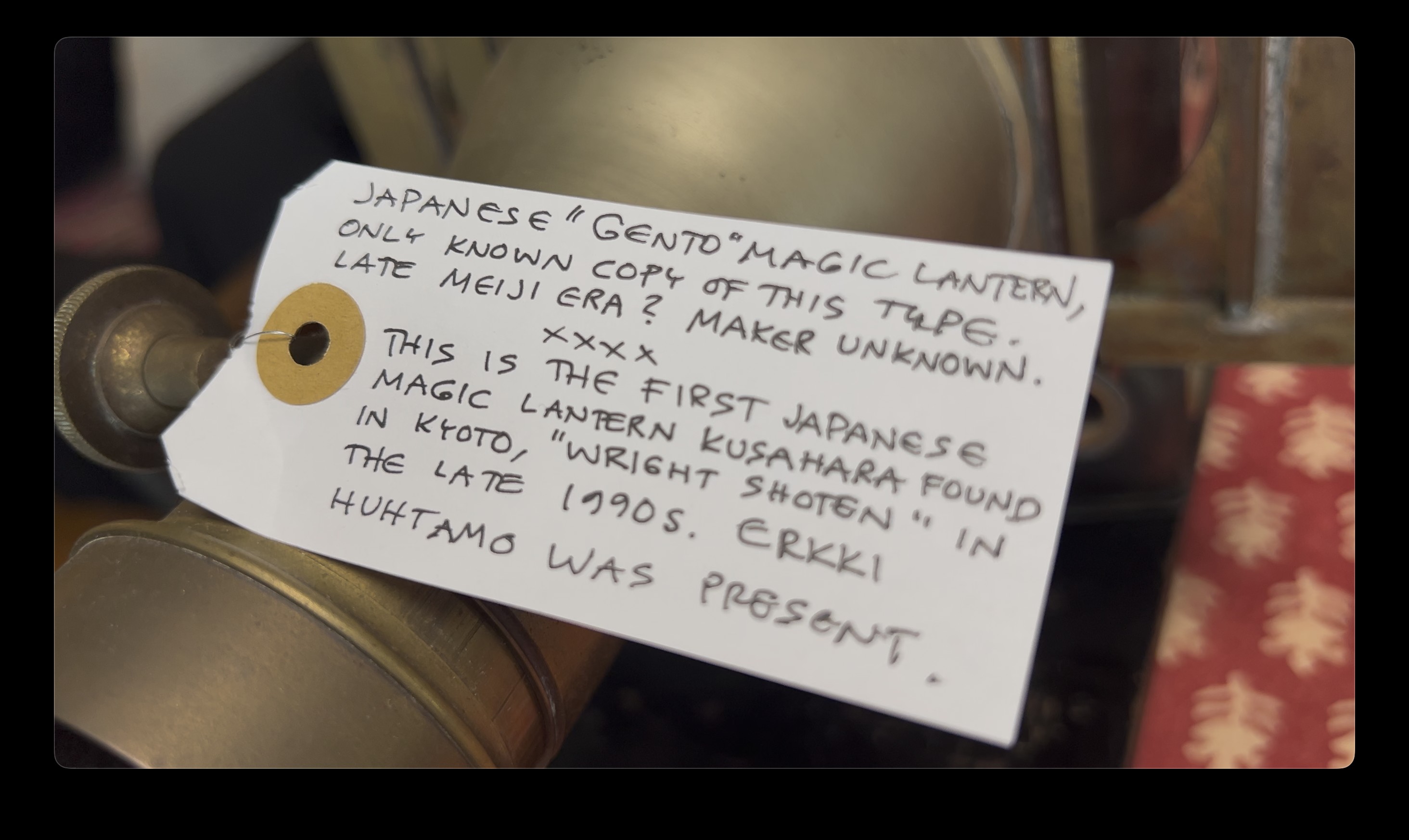
The exact date of manufacture is uncertain, but I believe it dates from the Meiji period, probably toward the end of the 19th century — the late Meiji era. It is a kerosene lamp magic lantern, and the kerosene lamp technology itself originated in Europe around the 1860s. Since this lantern was clearly designed for a kerosene lamp, it cannot predate the Meiji period. My estimate is that it was manufactured between 1880 and 1900.
Erkki Huhtamo (06:21)
By the time this lantern was in use, Japan already had a long history of magic lantern performance. The tradition known as utsushi-e was particularly distinctive. Let me explain briefly. Utsushi-e began to gain popularity in the late 18th century. It combined elements of Japan's tradition of visual storytelling and shadow theater, likely with some influence from Western magic lanterns that arrived via the Netherlands. However, the Japanese developed a highly original form of performance. They used very lightweight wood such as paulownia to create handheld lanterns with simple oil lamps as their light source, projecting from behind a screen to tell stories drawn from Japanese popular culture and mythology. This lantern culture was dramatically different from anything in Europe or elsewhere. But the lantern we're looking at here belongs to a different, newer development from the Meiji period.
When the Meiji Restoration opened Japan's doors, foreign goods and projection technologies began to flood in — magic lanterns from England, France, and even America. Before long, Japanese craftsmen — in a characteristically Japanese fashion — studied the imported lanterns and slides and began producing their own. They incorporated distinctly Japanese aesthetics and locally available materials. While brass was common in the West, Japanese makers often used copper. They also repurposed thin metal sheets recycled from imported tin cans and containers. This lantern is a fascinating example of such cultural hybridization.
While the traditional Japanese lantern culture of utsushi-e remained popular, a new type of magic lantern performance also took root alongside it — for lectures and educational purposes, for religious use with Buddhist slide sets, and for entertainment. Japan thus had essentially two lantern cultures coexisting. A third trend also emerged: relatively wealthy families began using small, lightweight lanterns for home entertainment, much as was happening in the Western world at the same time.
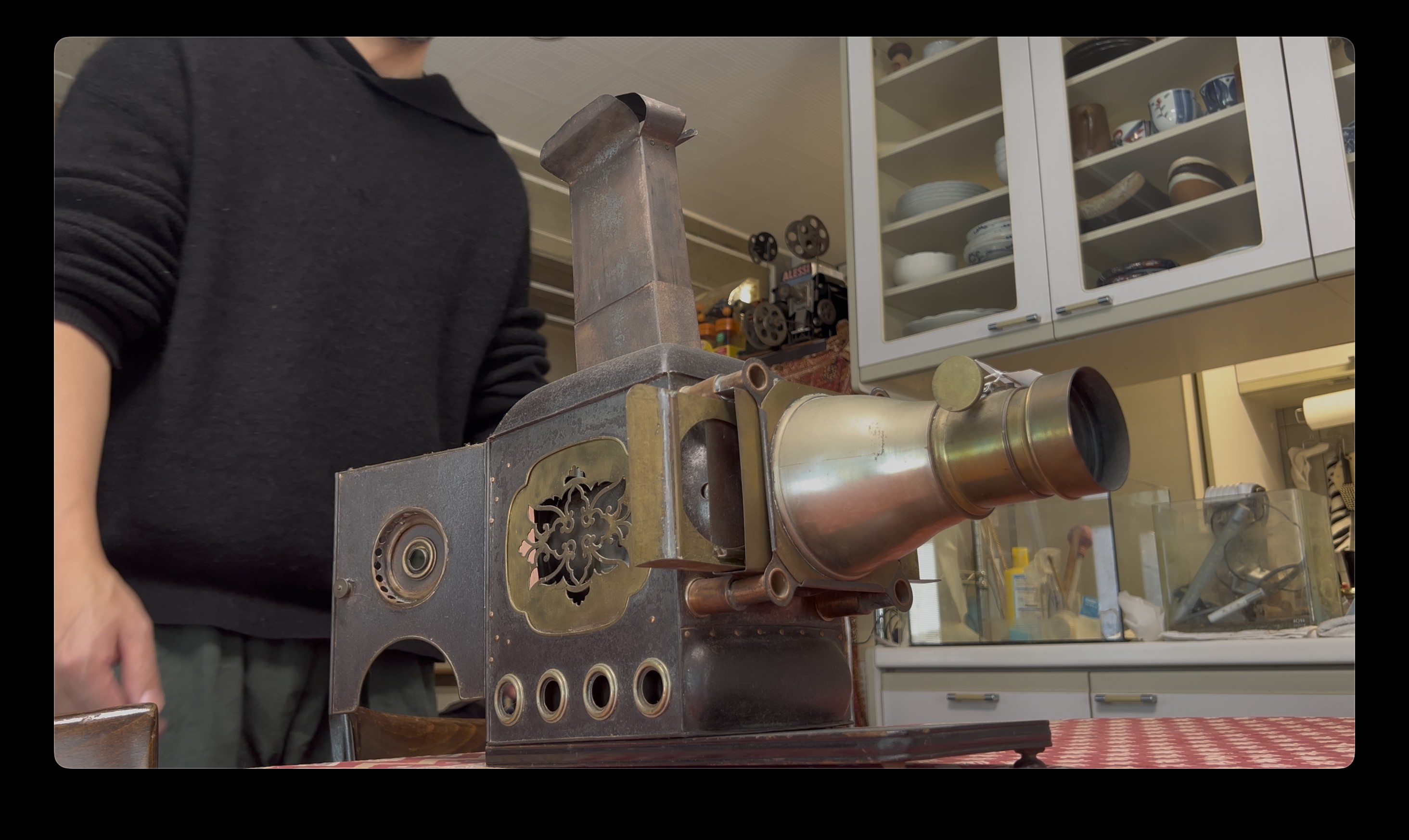
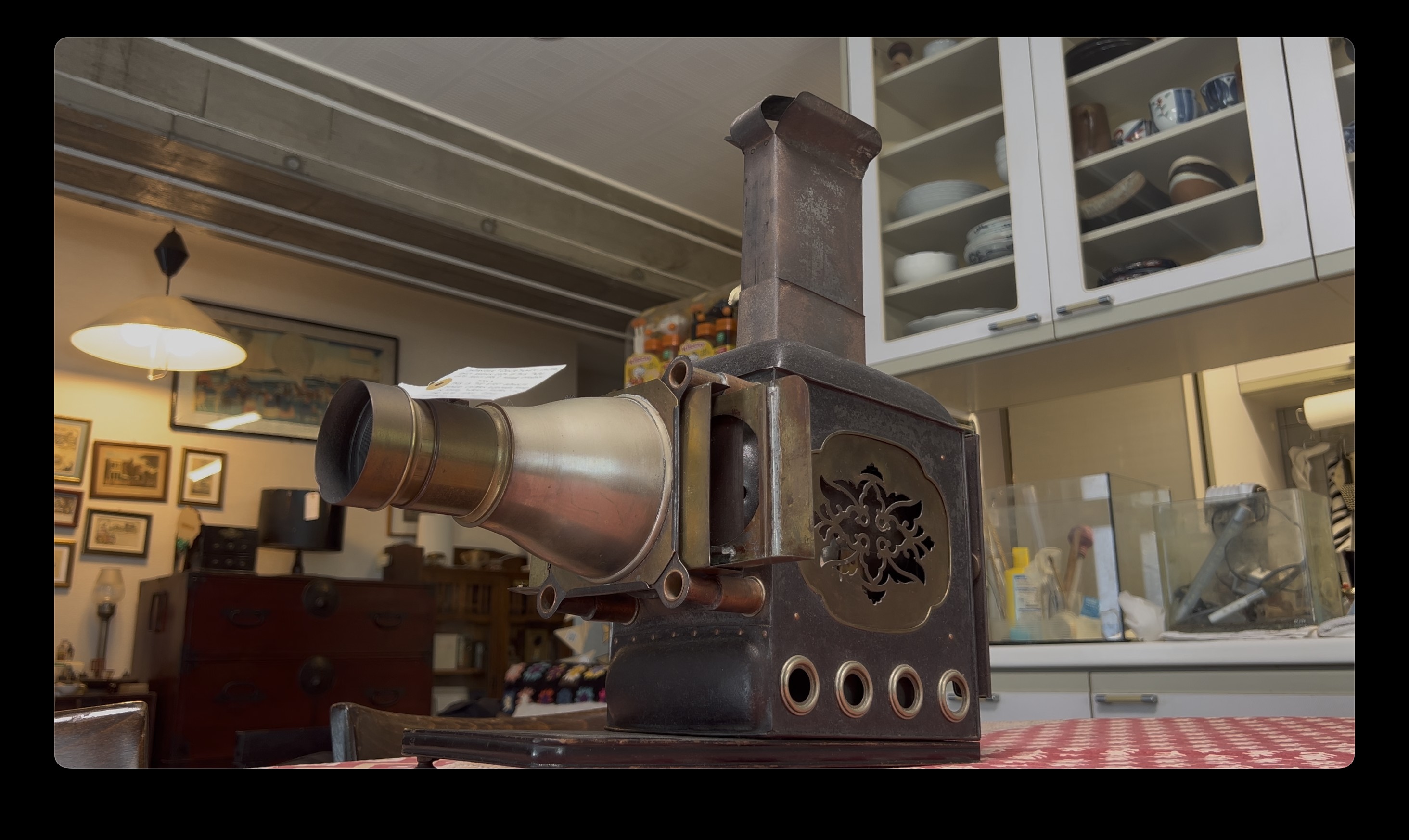
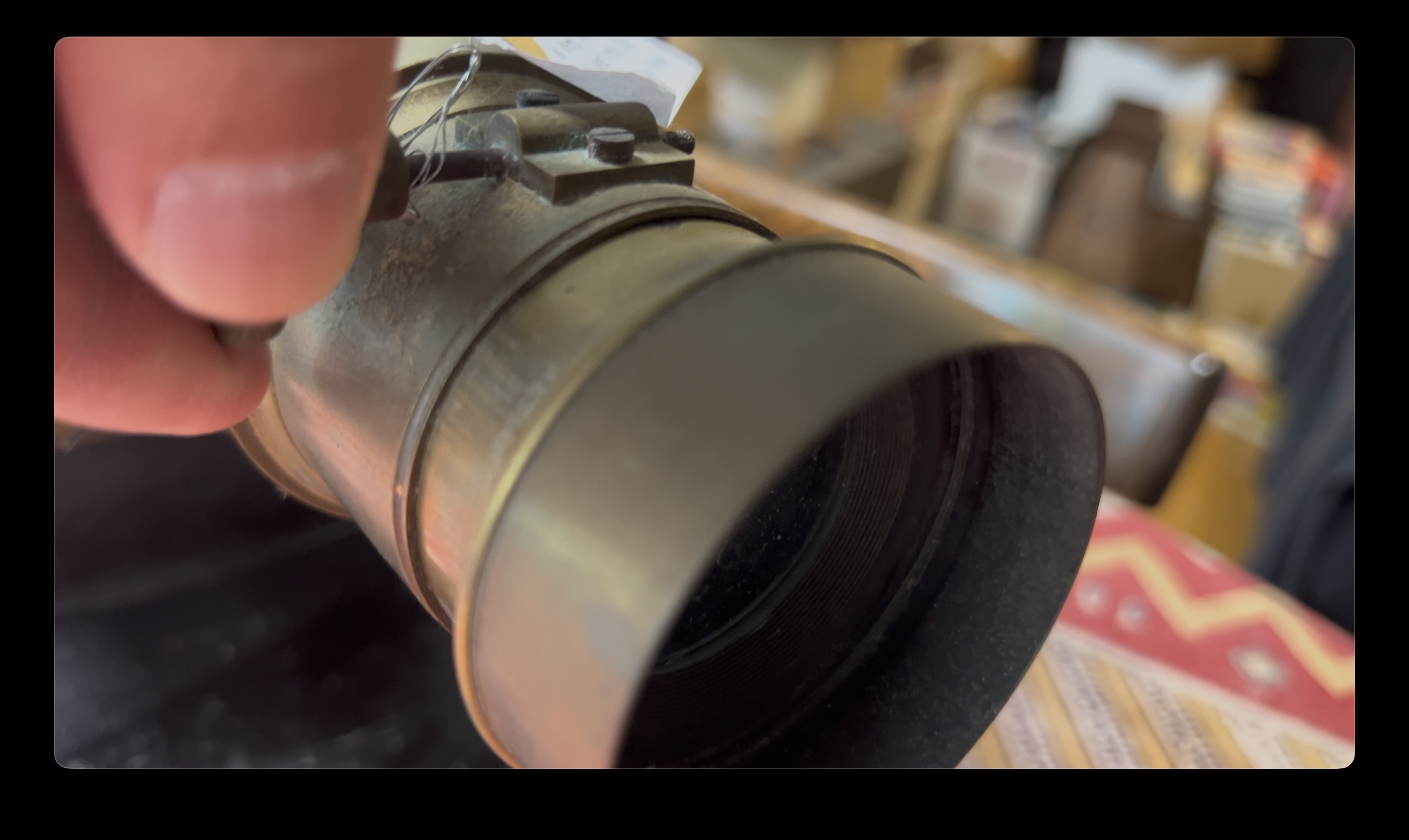
What makes this lantern fascinating is the coexistence of features shared with Western lanterns and features that are uniquely its own. Among the shared features is the kerosene burner with a height-adjustable chimney. Adjusting the chimney height allows the operator to control the draft so the flame burns evenly — an adjustment that could be made during performance. At the rear is a reflector, essential for directing the light from the flat wick in the burner toward the condenser lens and objective lens. Inside, you can see the oil tank adjustment knob. The kerosene is stored in a tank beneath the burner. Western lanterns used similar burners. Here we see a defining characteristic of Meiji culture — receiving technology from the West while adapting it to Japanese culture.
Erkki Huhtamo (11:10)
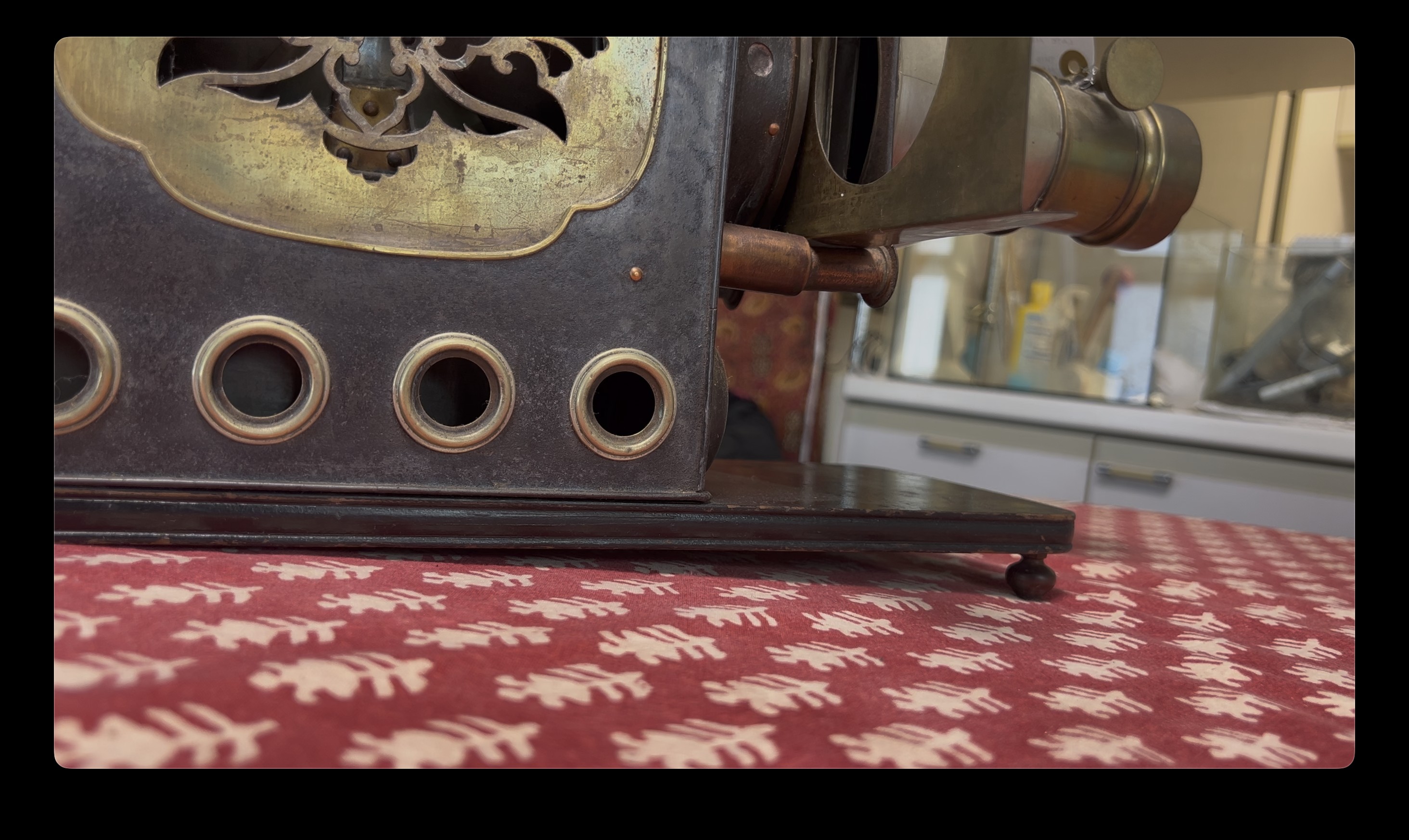
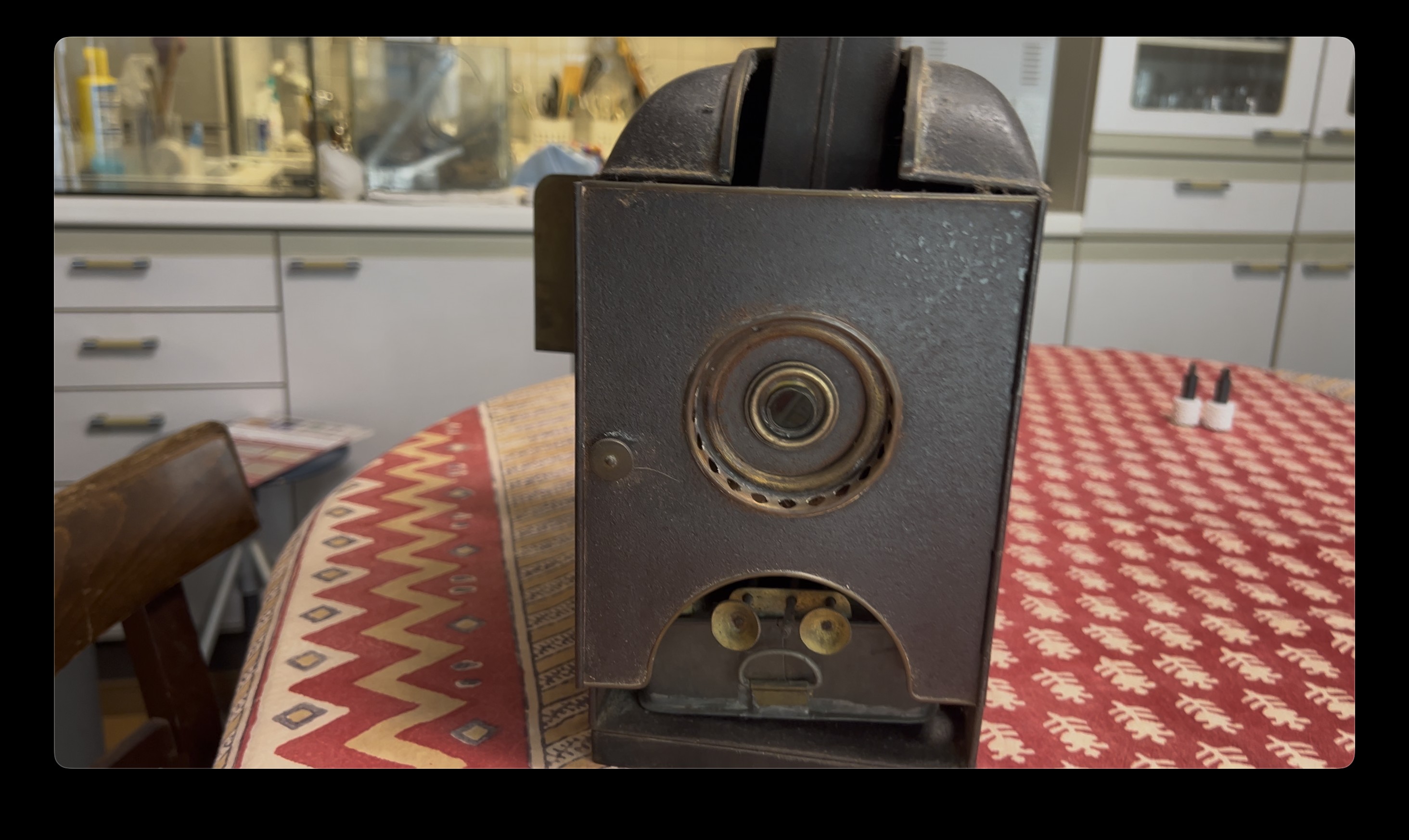
What is particularly intriguing about this lantern are the decorative openings on its sides. This is a very distinctive design element — I have never seen such openings on magic lanterns from Japan or any other country. Whether these are purely decorative — traditional ornament to enhance the appearance — or functional, is worth considering. I believe they serve a functional purpose as well. The burner naturally generates heat, and a cooling system is needed. While smoke exits through the chimney at the top, these side openings serve as ventilation holes that help cool the body. These openings, then, give this lantern its unique character as decoration while simultaneously serving the practical function of cooling.
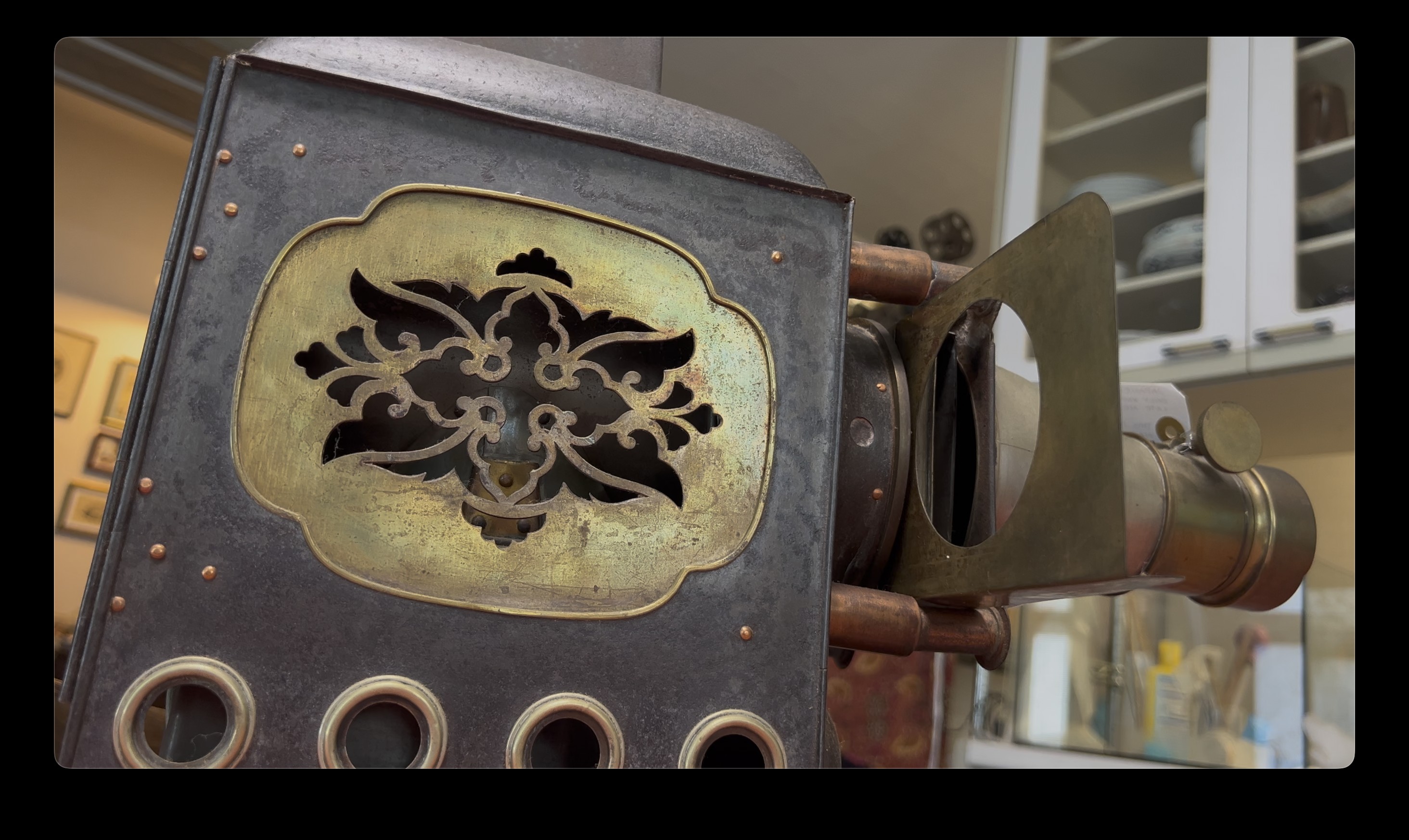
At the front is the lens barrel, with a focus knob at the tip — a feature common to Western lanterns as well. Between the body and the lens is a conical light shield that concentrates the beam and prevents light from leaking to the sides. Since this type of lantern could not produce extremely bright light, gathering the beam as efficiently as possible was critical for obtaining a clear image on the screen.
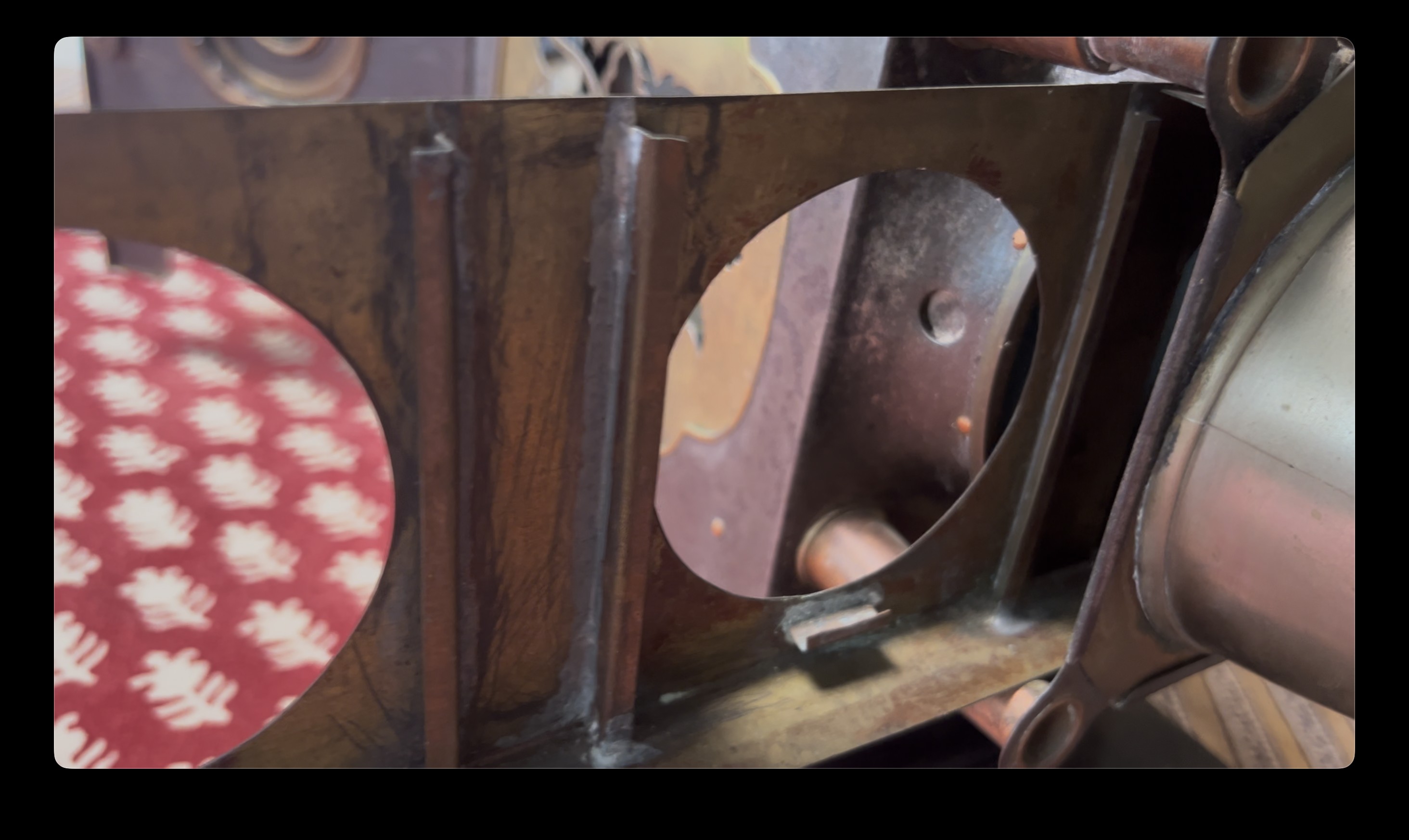
Between the body and the lens there is also the slide stage. This is the mechanism for inserting and projecting glass slides one at a time. The slide stage appears to be made of copper — copper seems to have been more readily available in Japan than brass. The slides used here differed from the hand-painted utsushi-e slides; they were closer to Western-style glass slides. This lantern uses square glass slides inserted one at a time. The slide stage has two positions, allowing slides to be swapped alternately so that the performance can continue without interruption.
Erkki Huhtamo (16:09)
Slides for this type of lantern were often hand-colored, but the manufacturing process itself was based on photographic techniques. An original drawing or photograph was captured on a glass negative, from which a positive glass slide was printed. These slides were then hand-colored to achieve more vivid imagery. Both educational slides — travel documentaries, hygiene instruction — and entertainment slides used this method. Imported Western slides could also be projected on this lantern, as the formats were sufficiently compatible. While the extent to which Western slides were actually used is unclear, the Kusahara Collection shows that many slides were produced domestically in Japan for this type of lantern.
Magic lantern culture from the Meiji through Taisho periods appears to have been extremely active and widespread in Japan. Large numbers of lanterns were manufactured domestically. Even today, Japanese-made magic lanterns turn up at antique markets and flea markets, clearly referencing Western models but with distinctly different design characteristics. One would never mistake this lantern for a Western one. It is unmistakably Japanese, while sharing certain features with its Western counterparts.
One more point worth noting: this lantern rests on a wooden base. On the front of the base you can see a small knob that allows the lantern to be tilted slightly upward, adjusting the projection angle by design. Interestingly, there appears to have been a similar knob at the rear as well, now lost or deliberately removed, leaving the lantern fixed at a slight upward angle. Such details provide clues about the environment in which this lantern was used.
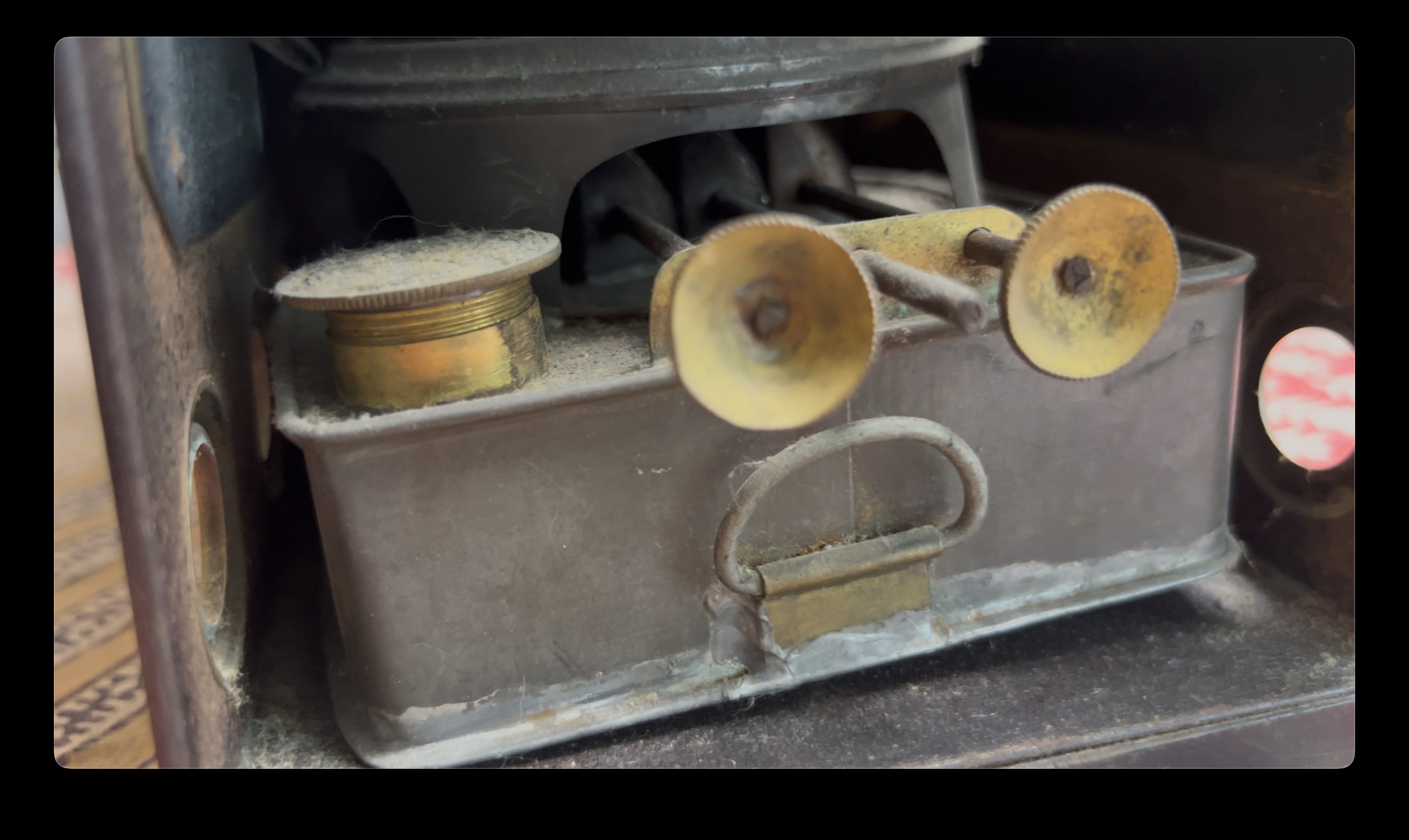
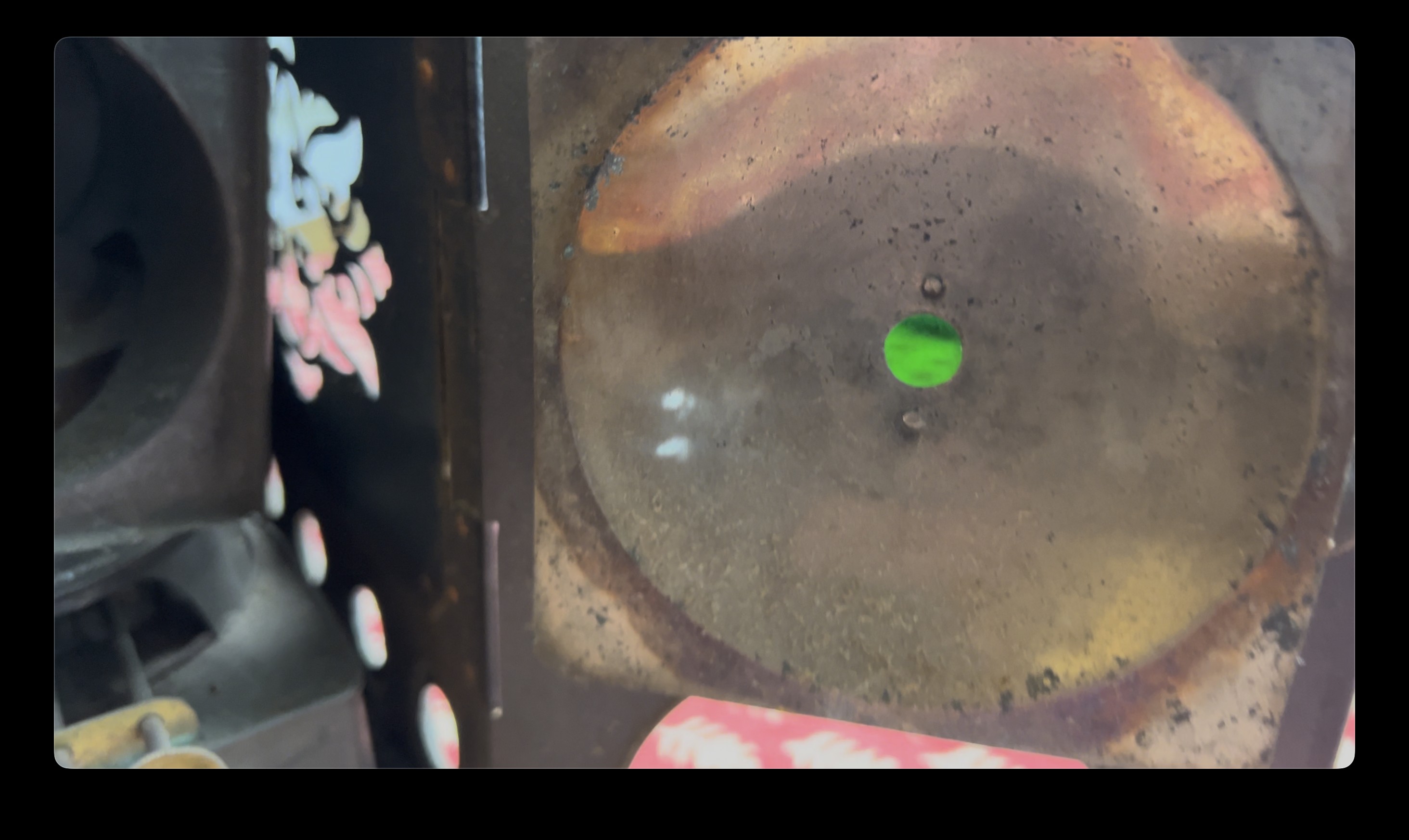
There is no specific provenance record for this lantern. But it is beautifully crafted and carefully made. If you survey the world's magic lantern cultures, you will find many lanterns that resemble one another. Yet this one has features that clearly set it apart from the hundreds — or even thousands — of lanterns I have seen. It is easy to understand why Kusahara-san was drawn to it. It was special, it was different, and that is why it captivated her. She went on to collect many more lanterns after this, but none are exactly the same. This lantern has always been one of my favorites in the Kusahara Collection.
Dominique Chen (21:15)
Thank you for this commentary. As I listened, I felt that this really is an ancestor of today's projector. The wooden base with its angle-adjustment knob closely resembles the feet that extend from the bottom of a modern projector, and the focus knob on the lens also connects to contemporary projectors. You mentioned earlier that these were used for home entertainment among relatively wealthy families — is it possible that they made their own slides to enjoy at home?
Erkki Huhtamo (21:28)
I think most of the slides used in Japanese homes at that time were factory-produced — relatively simple slides with outlines stamped from copper plates onto glass, sometimes colored by hand. Making slides by hand is more difficult than one might think. When coloring them, only certain types of pigments can withstand the heat and light of projection, and the technique of painting lantern slides required specialized training. It is unlikely that ordinary households were producing their own slides, and the Kusahara Collection contains very few such handmade examples. Even the small slides used in homes were almost certainly purchased from shops.
Dominique Chen (29:43)
I asked this because I recalled how, when video cameras appeared in the 1960s and 70s, avant-garde artists began experimenting with the new medium. I was imagining whether, similarly, in the late 19th or early 20th century, there might have been experimental individuals who tried to create their own magic lantern slides as a form of artistic expression, rather than for educational purposes.
Erkki Huhtamo (30:27)
That is a very interesting question. Could Taisho-era modernist artists have made their own magic lantern slides? At the time, there were many lanterns in Japan, and acquiring one would not have been particularly difficult. I myself have never seen an example of such artistic slides, but it is fascinating to contemplate. Japan's experimental artists of the early 20th century were remarkably cosmopolitan — many had spent time in Paris and followed the latest developments in the avant-garde. However, magic lantern performances and early film screenings fundamentally belonged to the domain of popular culture. Whether any artist of that era produced their own slides for artistic performances is something I honestly cannot say. Investigating the rich body of avant-garde publications from 1920s Japan might turn up some clues — at least until the early 1930s, when the Manchurian Incident changed so many things.
Dominique Chen (32:26)
I think these media-archaeological imaginings arise because this magic lantern shares unexpected commonalities with modern projectors and computers. The side openings you described as functional earlier remind me of the fan structures that cool CPUs and GPUs in today's high-performance computers. And the fact that you can see the internal mechanism — many modern PC cases have transparent side panels, so in that sense, there is an uncanny resemblance between a machine from over a century ago and today's machines.
Erkki Huhtamo (33:34)
Come to think of it, the early iMac was exactly like that — you could peer through the acrylic housing and see the interior like a miniature landscape. That iMac was designed on the idea that behind the screen existed a mystical world of data technology, and you could observe the internal structure through the sides and back. It is intriguing that this design philosophy of "revealing the interior" is shared across more than a century.
Dominique Chen (34:12)
Connecting the past and present like this makes the threads of history feel so compelling. I look forward to continuing to let our imaginations expand and to deepening this research. Professor Huhtamo, thank you very much. I think even this first session alone has provided us with a wealth of material.
Erkki Huhtamo
Thank you as well. Let us talk again soon.